Lokrum's peacocks and wildlife: birds, bats, butterflies and seagrass
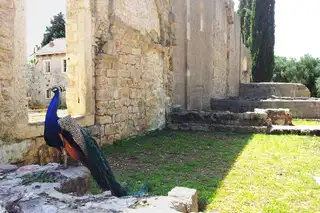
The peacocks are the first animals you meet on Lokrum, strutting round the monastery and the harbour. They are not native: they arrived in the 19th century. The real wildlife story is quieter: dozens of bird species, bat colonies in the monastery and protected seagrass meadows around the shore.
By the Lokrum Tours guide team · Updated 24 Nov 2026 · Facts checked 24 Nov 2026 · Tour prices and ratings from GetYourGuide, checked 24 Nov 2026
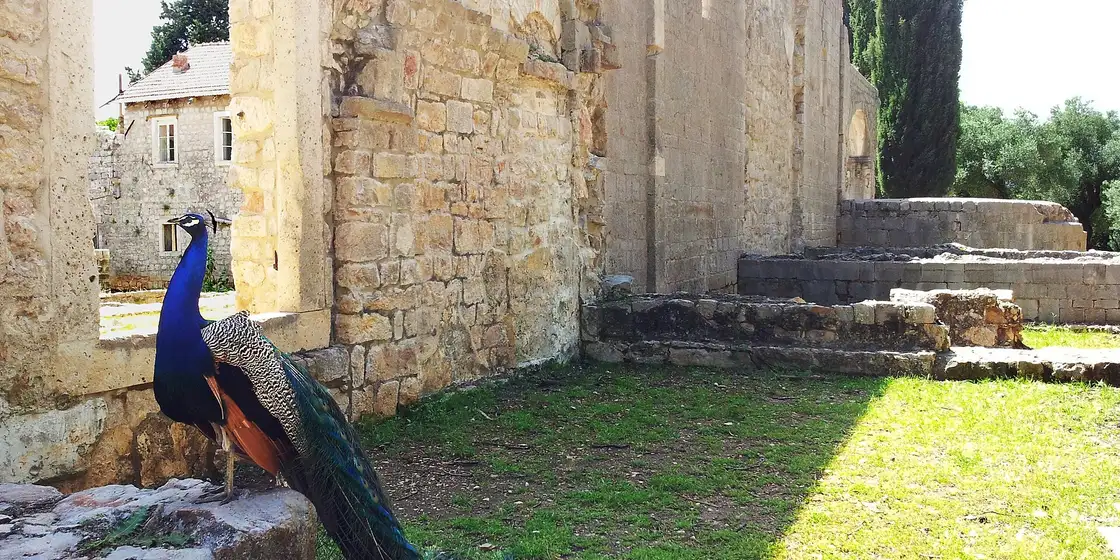
The peacocks
Lokrum’s Indian peafowl (Pavo cristatus) were introduced in the mid-19th century, most likely during Archduke Maximilian’s time, and the reserve monitors them as a non-native species 1. They are used to people, but feeding or disturbing them, or any wild animal, is against the rules 2.
Birds
The reserve has recorded 52 bird species on Lokrum, 12 of them resident nesting birds, including the eagle-owl; the large sea caves on the south side are key nesting places for swifts and eagle-owls 3.
Bats
Twelve of the 34 bat species recorded in Croatia live on Lokrum, and the Benedictine monastery holds their maternity colonies 4. Another reason not to stray from the marked paths around the buildings.
Butterflies, moths and tortoises
The reserve lists 212 species of butterflies and moths, among them the two-tailed pasha along the coast, and Hermann’s tortoise on land 5.
Under the water
The Posidonia oceanica seagrass meadows around Lokrum shelter many species, including the strictly protected noble pen shell 6. Anchoring and pollution threaten the meadows, and their recovery would take decades 7. The island and a 150 m belt of sea are part of the Natura 2000 network 8.
Rabbits: an unwanted guest
European rabbits are an invasive species on Lokrum, according to a 2016 paper by Jasprica and Dolina cited on Wikipedia; the reserve’s own animal page does not mention them 9.
Seeing the wildlife
The peacocks need no effort: they find you near the monastery and the harbour. For the underwater life, snorkel from the Portoč pier, which the reserve recommends for a glimpse of coastal and marine life 10. A guided walk is the best way to hear about the rest.
We earn a commission if you book through our links to GetYourGuide, Viator or Trip.com, at no extra cost to you. It never changes our ranking. How this works · How we choose
-
Guided scenic walk on Lokrum, ferry and entry included
Best guided visit to the island · Ploče Gate area, by the Old Port · 3 hours · Lokrum: guided walk on the island; ferry and entry included
A guided walk on the island, with the ferry crossing and the reserve entrance included in the price.
See prices and dates on GetYourGuide 5.0 (35 reviews on GetYourGuide) from €87 per person checked 24 Nov 2026 See today's price and rating on GetYourGuide
Questions people ask
Why are there peacocks on Lokrum?
Indian peafowl were introduced in the mid-19th century, most likely while Archduke Maximilian owned the island. The reserve monitors them as a non-native species.
Can I feed the peacocks?
No. Feeding or disturbing wild animals is against the reserve's code of conduct.
Are there rabbits on Lokrum?
A 2016 scientific paper describes European rabbits as an invasive species on Lokrum. The reserve's own animal page does not mention them.
Keep planning
-
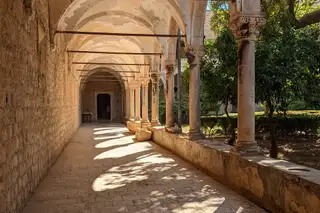 Benedictine monasteryThe Benedictine monastery of St Mary on Lokrum: founded by 1023, rebuilt after the 1667 earthquake, Archduke Maximilian's summer residence and the legend of the curse..
-
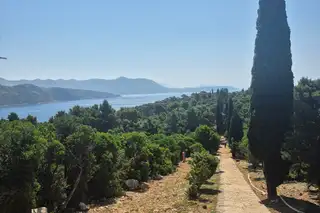 Botanical gardenThe botanical garden on Lokrum, founded in 1959 and the only island botanical garden in Croatia, plus Maximilian's Path of Paradise and Charlotte's Well..
-
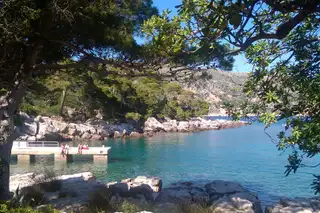 SwimmingWhere to swim on Lokrum: the Dead Sea lake, the Portoč pier, the southern rocks and Buža arch, the naturist area's 2026 status, sea temperatures and what to bring..
-
 Rules and accessThe Lokrum Reserve's rules in plain English: no overnight stays, no smoking, no drones without permission, no feeding peacocks, plus children, disability and pets..
Sources for this page
- Public Institution Lokrum Reserve, lokrum.hr: “Today, Lokrum Island is home to a population of Indian peafowl (Pavo cristatus), introduced in the mid-19th century, most likely during the stay of Archduke Maximilian of Habsburg.” Checked 24 Nov 2026.
- Lokrum Reserve, code of conduct (PDF): “remove, capture, or disturb wild species from their natural habitat • feed wild animals” Checked 24 Nov 2026.
- Public Institution Lokrum Reserve, lokrum.hr: “On Lokrum Island, 52 species of birds have been recorded, of which 12 are resident nesting birds” Checked 24 Nov 2026.
- Public Institution Lokrum Reserve, lokrum.hr: “A total of 12 out of the 34 bat species recorded in Croatia were documented on Lokrum” Checked 24 Nov 2026.
- Public Institution Lokrum Reserve, lokrum.hr: “On Lokrum Island, 212 species of diurnal and nocturnal butterflies have been recorded” Checked 24 Nov 2026.
- Public Institution Lokrum Reserve, lokrum.hr: “Characteristic species for Posidonia beds are: ... the noble pen shell (Pinna nobilis) – strictly protected species” Checked 24 Nov 2026.
- Public Institution Lokrum Reserve, lokrum.hr: “It is threatened by many human activities (anchoring, pollution, etc.) and is particularly vulnerable because the restoration of potentially damaged habitats would take decades.” The reserve's website does not publish an anchoring ban; if you come by private boat or kayak, avoid anchoring on the seagrass. Checked 24 Nov 2026.
- Public Institution Lokrum Reserve, lokrum.hr: “the entire island of Lokrum, including the belt of sea of about 150 meters from the coast, is also an area of the Natura 2000 ecological network (HR4000017 Lokrum)” Checked 24 Nov 2026.
- Wikipedia (citing Jasprica & Dolina 2016): “The invasion of the european rabbit (Oryctolagus cuniculus L., 1758) on the Lokrum island–an example of poor management of the protected area.” The reserve's own wildlife page does not mention rabbits. Published 2016 · checked 24 Nov 2026 · secondary source.
- Lokrum Reserve, official map of Lokrum: “The pier is both a popular swimming spot and one of the suitable places to explore a glimpse of coastal and marine life.” Checked 24 Nov 2026.